Cross-contamination prevention in multi-pet homes is one of the most critical — and often overlooked — aspects of post-surgical and wound recovery. When dogs or cats share the same environment, bacteria and pathogens can easily transfer between pets, increasing the risk of infection and delayed healing.
As a veterinary surgeon and founder of Pet Pjs, I’ve seen firsthand how simple, consistent preventive measures at home can dramatically improve outcomes for pets — and peace of mind for their humans.
🦠 Why Cross-Contamination Prevention in Multi-Pet Homes Matters After Surgery
In multi-pet households, cross-contamination prevention in multi-pet homes requires a combination of physical barriers, hygiene routines, and proper post-operative protection.
- Licking or grooming each other
- Shared bedding, bowls, or toys
- Human hands, clothing, or surfaces
- Open wounds or surgical sites
According to guidance from the American Veterinary Medical Association, post-operative pets are particularly vulnerable due to temporary immune suppression and exposed surgical areas, therefore prioritizing Cross-Contamination Prevention in Multi-Pet Homes | Pet Pjs leads to safer healing, fewer complications, and greater peace of mind for pet families.
⚠️ Why It Matters After Surgery or Injury
Pets recovering from surgery often face:
- Compromised skin barriers
- Sutures or incisions
- Reduced mobility and stress
In a multi-pet environment, this increases the risk of:
- Surgical site infections
- Delayed wound healing
- Antibiotic resistance
- Re-hospitalization
The Centers for Disease Control and Prevention highlights that infection prevention always starts with environmental control and barrier protection — principles that apply equally in veterinary medicine.
✅ Practical Prevention Strategies at Home
1. Physical Barriers Matter
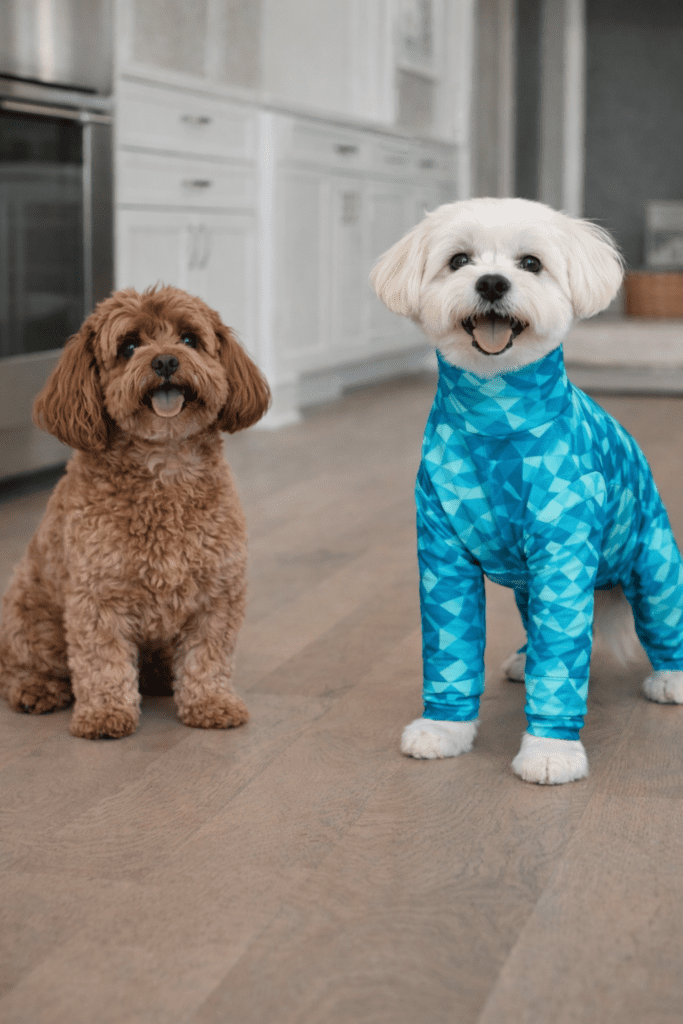
Using recovery suits instead of cones helps protect surgical sites while allowing pets to move, rest, and interact more naturally — without exposing wounds.
Pet Pjs recovery suits act as a breathable, washable protective barrier, reducing direct contact with saliva, fur, and environmental contaminants.
2. Dedicated Spaces (Even Temporarily)
When possible:
- Separate sleeping areas
- Individual food and water bowls
- Restricted access during the first days post-surgery
This is not about isolation — it’s about controlled healing.
3. Textile Hygiene Is Critical
Soft surfaces are silent carriers of bacteria.
Best practices:
- Wash recovery garments daily
- Change bedding frequently
- Use hot water and pet-safe detergents
Unlike disposable options, Pet Pjs are designed for repeated washing without losing shape, breathability, or comfort.
4. Human Hygiene Is Part of the Equation
Hands, clothing, and routines matter:
- Wash hands before and after handling wounds
- Avoid touching multiple pets without sanitation
- Change clothes if caring for a healing pet extensively
💬 Expert Insight
“In multi-pet homes, recovery is not only about surgery — it’s about environment control. A well-protected incision and good hygiene habits can shorten healing time and prevent complications.”
— Vanessa CM Ferraz, DVM, PhD | Founder of Pet Pjs
🧵 Why Recovery Suits Make a Difference
Compared to traditional e-collars, recovery suits:
- Reduce stress and anxiety
- Allow natural movement and rest
- Protect against licking from other pets
- Improve compliance for long-term recovery
Veterinary teams increasingly recommend barrier-based solutions as part of post-operative protocols — especially in households with more than one pet.
🏁 Final Thoughts
Healing doesn’t happen in isolation. In multi-pet homes, protection, hygiene, and smart barriers are essential allies in recovery.
At Pet Pjs, every design choice reflects one goal: safer healing with comfort, dignity, and science-backed care — for pets and the people who love them.
🔗 Learn more at www.pet-pjs.com