Watching a senior dog come home after surgery can bring a mix of relief and concern. The procedure may be over, but now comes the part pet parents manage themselves: helping their dog rest, move safely, stay away from the surgical area, and settle back into a comfortable routine.
Older dogs can have very different recovery needs from one another. Age alone does not determine how quickly a dog will bounce back. The American Animal Hospital Association’s senior-care guidance notes that a senior pet’s health and level of function before a procedure can influence what recovery looks like afterward. That makes individualized veterinary instructions especially important.
November’s National Senior Pet Month is a fitting reminder that caring for an older dog often means paying closer attention to comfort, mobility, and small changes in behavior. If your senior dog is recovering after surgery, a thoughtful home setup can make those first days easier to manage for both of you. The 2026 veterinary-awareness calendar from The Animal Medical Center lists National Senior Pet Month among November’s awareness observances.
Start With a Quiet, Comfortable Place to Rest
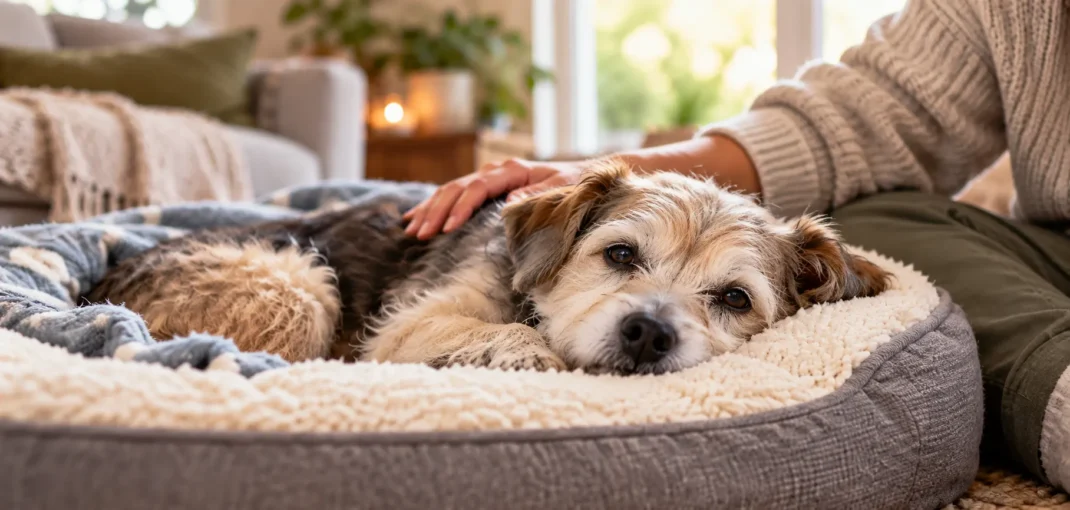
A senior dog may appreciate a little more support than usual after a veterinary procedure. Before your dog comes home, prepare a clean resting area away from busy walkways, stairs, other pets, and anything that may encourage jumping.
A soft, well-padded bed can be helpful for an older dog that already moves more slowly or has difficulty settling comfortably. Rugs or other non-slip surfaces can also make it easier to move through areas with slick flooring.
Keep essentials within easy reach. Fresh water, the resting area, and a safe path to the door can all help reduce unnecessary movement while your dog is healing.
Pay Attention to Changes Without Assuming They Are “Just Age”
Senior dogs are often experts at subtle communication. Instead of crying or showing obvious distress, an older dog may move differently, hesitate before standing, sleep more, seem unusually restless, or become less interested in normal activities.
Some changes may simply reflect the expected recovery period. Others deserve a conversation with your veterinarian.
AAHA’s guidance on pain management in senior pets notes that pet parents may sometimes mistake behavior or mobility changes related to pain for normal aging. During recovery, it helps to pay attention to what is different from your dog’s usual routine.
The goal is not to diagnose the problem at home. It is to notice when your senior dog may need another professional look.
Protect the Surgical Area From Licking and Scratching
One of the most important parts of recovery is preventing your dog from interfering with the surgical site.
Licking, chewing, scratching, or rubbing can disturb an incision. VCA Animal Hospitals recommends restricting access to the surgical area and notes that, depending on incision location, a surgical recovery garment may sometimes be used as an alternative to an Elizabethan collar when the veterinarian considers it appropriate.
For some dogs, a properly fitted dog recovery suit can provide body coverage while allowing them to rest, eat, sleep, and move without a device surrounding the head.
The important part is choosing protection based on your dog’s procedure, incision location, and behavior—not simply assuming one option works for every senior dog.
When a Recovery Suit May Be Part of the Recovery Plan
Comfort depends on fit.
A recovery garment should provide appropriate coverage without being excessively tight or loose. This matters for every dog, but it can feel particularly important when an older dog is already moving carefully after surgery.
Pet Pjs provides detailed Instructions for putting on and adjusting its recovery suits. Current guidance includes checking the neck so that two fingers fit comfortably, adjusting the waist when needed, and evaluating overall coverage after the suit is secured.
Once the suit is on, continue checking it throughout the day. Make sure it stays clean and dry, does not bunch in an uncomfortable area, and continues to fit properly as your dog lies down, stands, or walks.
If your veterinarian has given specific instructions for the surgical site, those directions should always take priority.
Keep the Recovery Routine Simple and Consistent
Older dogs often benefit from predictable routines, especially when their normal activity has temporarily changed.
Try to keep meals, bathroom breaks, rest periods, and veterinarian-approved activity reasonably consistent. Avoid introducing unnecessary excitement while your dog is still under restrictions.
A simple recovery routine might include:
- Keeping walks short and controlled when instructed.
- Providing good traction on slippery floors.
- Maintaining a clean and comfortable resting space.
- Checking the recovery garment and surgical area regularly.
- Preventing rough play with other pets.
- Following the discharge instructions provided by your veterinarian.
Consistency also makes it easier to recognize when something changes. If your dog suddenly seems much less comfortable, has difficulty moving, or starts behaving differently than earlier in recovery, you will be more likely to notice.
Know When Your Veterinarian Should Hear From You
Every surgical procedure is different, so your veterinary team should remain your primary resource throughout recovery.
VCA’s post-operative guidance for dogs advises contacting the veterinary hospital for concerns such as excessive swelling or redness, discharge, unpleasant odor, or ongoing bleeding from the surgical area.
If your dog persistently tries to lick, chew, or scratch the surgical area, or if the garment no longer seems to fit or protect the intended area correctly, contact your veterinarian for guidance.
When in doubt, it is better to ask. Your veterinarian knows the procedure your dog had, their medical history, and what the expected recovery should look like.
Give Your Senior Dog the Comfort Their Recovery Needs
Recovery does not have to look the same for every senior dog.
One may want to sleep quietly beside you for most of the day. Another may feel ready to move before the veterinarian wants them to. Some dogs tolerate an e-collar well, while others may be candidates for a different form of protection.
Recovery at home is about more than any single tool. A quiet resting space, careful observation, appropriate activity restrictions, and your veterinarian’s instructions all play a role in helping a senior dog through the post-surgical period.
When additional body coverage is appropriate, a dog recovery suit may be one option to help protect the area while allowing your dog to rest and move comfortably. Pet Pjs recovery suits are designed with breathable fabric and adjustable features for recovery support.
For product or sizing support, contact the Pet Pjs team.